

Our Story
House of
Jagat Seth.
The Banker of the World.
A heritage remembered. A philosophy carried forward. An institution built for the future.
A Title, not a Name
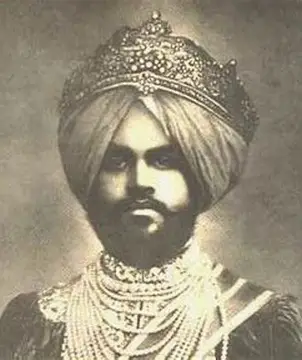
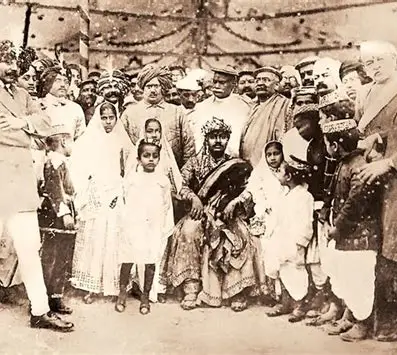
“Jagat Seth” was not originally a conventional family surname. It was a distinguished title conferred upon the head of a financial house.
Jagat
The world.
Seth
Banker, merchant, financier.
The title represented extraordinary financial standing and influence across undivided Bengal and far beyond it.
The historical House of Jagat Seth was involved in treasury, credit, bullion, currency, trade finance, remittance through hundis, and financial relationships with rulers, merchants and European trading interests.
Its significance was never simply the wealth it possessed. It was the ability to organise, move, finance and deploy capital.
The financial architecture
The instruments of an older financial world.
Treasury
Managing and transferring government and commercial revenues.
Credit
Providing financing to rulers, merchants and major economic participants.
Bullion
Participating in the movement and settlement of gold and silver.
Currency
Operating within the monetary and minting infrastructure of the period.
Hundis
Moving value across distant territories without transporting large quantities of specie.
Trade Finance
Supporting merchants and the commerce of the age.
Sovereign Finance
Maintaining financial relationships with governments and rulers.
War Finance
Demonstrating how capital could influence political and military outcomes.
This was more than accumulated wealth. It was financial infrastructure.

Capital Without Borders.
Undivided Bengal was one of the great commercial and financial centres of its age. Merchants, rulers and European trading companies alike required access to capital and to the infrastructure that moved it.
Value travelled across territories that were politically divided and frequently at odds.
Capital follows opportunity, creditworthiness, structure and trust — not merely geography.
Moksha applies the same principle. We evaluate opportunities across countries, sectors and asset classes, while maintaining disciplined underwriting and risk management wherever capital is committed.
When capital changed History
The historical record surrounding Siraj ud-Daulah, Mir Jafar, the East India Company and the Battle of Plassey in 1757 remains one of the most studied episodes in which finance and political power intersected.
It is not an episode to be celebrated. It is an episode to be understood. It demonstrates, with unusual clarity, that financial influence at scale is never confined to the ledger.
Financial influence carries extraordinary power — and extraordinary responsibility.
The lesson is that capital must remain disciplined, independent and governed by long-term principles, rather than becoming captive to political interests or short-term advantage.
The lesson survived even when the institution did not.

The legacy we carry
Within our family, the story of the House of Jagat Seth has been passed down through generations.
It is a heritage remembered not merely for wealth, but for the responsibility, influence and discipline associated with capital.
While this lineage is preserved primarily through family tradition rather than a complete documented genealogical record, its philosophy remains an important part of the heritage that inspires Moksha.
We do not claim to reproduce the past.
We seek to understand it.
BECAUSE THE MOST VALUABLE INHERITANCE IS NOT WEALTH. IT IS THE WAY WEALTH IS UNDERSTOOD, PROTECTED AND DEPLOYED.
The world changed. The questions did not.
The enduring questions
Where should capital go?
Who should receive it?
How should it be protected?
How should it be structured?
How should businesses be financed?
How should wealth survive generations?
How can capital become productive rather than merely accumulated?
Moksha Global
The House Returns.
From Banker of the World to Steward of Global Capital.
Moksha does not seek to recreate the historical house literally. We reinterpret its principles for a borderless financial world.
The old house operated through treasury, credit, bullion, currency, trade finance and relationships.
Wealth Management
Asset Management
Investment Management
Private Capital
Permanent Capital
Business Ownership
Multi-Family Office
The instruments have changed. The philosophy has not.
From Wealth to Institution
Our ambition is not simply to manage money. It is to build an institution capable of holding capital to account.
Preserve capital. Identify opportunity. Underwrite risk. Structure transactions. Invest intelligently. Protect the downside. Compound across generations. This is the modern expression of the philosophy inherited from the financial tradition that inspires the firm.

The original House of Jagat Seth belonged to an age of empires. Moksha belongs to an age of institutions.
The old house connected rulers, merchants and trading interests.
Moksha connects families, institutions, entrepreneurs, businesses and capital.
The old house facilitated commerce.
Moksha seeks to finance, invest in and own the businesses that create tomorrow's commerce.
The old house preserved wealth across generations.
Moksha seeks to build permanent capital designed to endure beyond generations.
House of Jagat Seth.
The Banker of the World.
A heritage remembered.
A philosophy carried forward.
An institution built for the future.
Moksha Global
Inspired by a tradition of capital.
Built for a borderless world.
Designed for generations.